
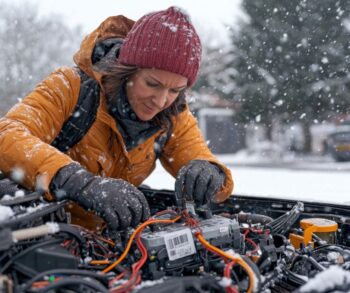
 Nothing ruins your day faster than turning the key and nothing happens, especially during freezing weather or after your car has been sitting awhile. Your battery might be small, but it’s one of the most important parts of your vehicle. If your battery fails, your car won’t start (and that’s never fun out on the road).
Understanding Your Car Battery
Most car batteries you see under the hood are 12-volt lead-acid batteries, built to give your vehicle the high burst of power needed to crank the engine. They’re tough, relatively inexpensive, and have been the standard for decades. But not all batteries are exactly the same:
- Standard flooded lead-acid batteries. Common and cost-effective.
- AGM (Absorbent Glass Mat). Better for vehicles with a lot of electronics or start-stop systems.
- EFB (Enhanced Flooded Battery). An upgrade over basic flooded batteries, especially for start-stop vehicles.
Whatever your car uses, a battery that’s cared for properly lasts longer and performs better.
How Long Should a Battery Last?
While some batteries can last 7-10 years with ideal conditions, most car batteries today realistically only last about 3 to 5 years under normal use. Extreme heat, cold, short trips, or extended parking without running your car can shorten that. In Pennsylvania, we can experience some pretty extreme weather that can impact your car battery’s life.
Tips to Increase Battery Life
Here are ways to help your battery go the distance:
- Drive it regularly. A car battery stays charged when the engine runs. If your vehicle sits unused for long stretches, its charge fades so try to drive at least 30 minutes once a week.
- Turn off accessories when parked. Lights, radios, seat heaters, and other accessories drain the battery if the engine’s off. Always make sure everything is off before you shut the vehicle down.
- Protect it from temperature extremes. Both heat and cold are enemies of battery life. During cold months, parking in a garage can help, and in really hot weather, keep your car in the shade if possible.
- Keep terminals clean. Corrosion on cable ends can block electrical flow. A simple cleaning with baking soda and water (and then a thin layer of petroleum jelly) keeps things flowing.
- Check connections. Loose cables or poor contact mean less reliable starts. Periodically tighten clamps and check for damage.
- Test your battery annually. Once your battery hits around 3 years old, it’s a good idea to have it tested by a shop before it leaves you stranded.
- Use a battery maintainer if you don’t drive often. If your car sits for weeks, a maintenance charger keeps it topped up and prevents deep discharge.
Signs Your Battery Might Be Failing
Here are common warning signs:
- Slow or labored starts
- Dim headlights or dashboard lights
- Unusual dashboard warning lights
- Visible corrosion on terminals
- Battery older than 3 to 5 years
If any of these pop up, especially during cold weather, it might be time to have your battery checked or replaced.
What Can Kill Your Battery Faster Than You Think
Even with proper care, certain habits will kill a battery quicker:
- Leaving accessories on without the engine running.
- Letting your car sit unused for too long.
- Constantly taking very short drives (your alternator doesn’t have time to recharge the battery).
- Extreme temperatures without protection.
If Your Car Won’t Start, Don’t Keep Cranking
Repeatedly cranking the starter when a battery is weak does not help; it just puts strain on the battery and can force you into a replacement sooner. If your car struggles to start, it’s better to test the battery and charging system than to keep spinning the starter.
Still Have Questions About Car Batteries? Give us a call at (610) 696-2633 or bring your car by. We’ll test your battery and charging system and help you avoid those cold morning surprises. Get in touch with us today.